.webp)

You’re Watching Sugar Levels, But Is Your Gut Out of Balance?
Understand diabetes through a different lens and the gut connection we often miss.
In many Indian families, diabetes has become so common that it almost blends into everyday life. A diagnosis in one member is often followed by similar stories in others, grandparents, parents, and now even younger family members. What once felt like an isolated health concern become a usual shared family experience. And over time, it has begun to feel casual.
But the casual familiarity we have with a diagnosis can sometimes take us away from a deeper understanding.
What if, instead of only looking at blood sugar numbers, we looked at the systems in the body that influence them every single day? What if we explored not just what diabetes is, but why it develops the way it does in our bodies?
This is where the conversation becomes more “meaningful”, and this is where your gut comes in.
What Really Happens in Diabetes?
Every time you eat, your body breaks down carbohydrates into glucose. Glucose enters your bloodstream and acts as a primary source of energy.
Your body uses a hormone called insulin to help move glucose from the blood into your cells, where it can be used for energy.
In a well-functioning system:
- Food is digested into glucose
- Insulin is released
- Cells respond to insulin
- Glucose enters the cells
- Energy is produced
In diabetes, this process becomes less efficient.
Either:
- The body does not produce enough insulin
or - The body’s cells do not respond well to insulin (a condition known as insulin resistance)
As a result, glucose remains in the bloodstream for longer than it should, leading to elevated blood sugar levels.
Over time, this imbalance begins to affect multiple systems in the body.
Different Forms, One Underlying Pattern
Diabetes can present in different forms:
- Type 1 Diabetes: The body produces ‘little to no insulin’ due to an autoimmune response
- Type 2 Diabetes: The most common form, where insulin resistance develops gradually over time
- Gestational Diabetes: Occurs during pregnancy due to hormonal changes
- Prediabetes: A stage where blood sugar levels are higher than normal but not yet in the diabetic range
In India, the majority of cases fall under Type 2 diabetes, a condition that develops slowly, often without noticeable symptoms in the early stages.
Why Indians Need to Pay Closer Attention
India has one of the highest numbers of people living with diabetes, and many more are in the prediabetes stage without knowing it.
What makes this particularly important for Indian populations:
- Diabetes tends to appear earlier (often in the 30s and 40s)
- It can develop even at lower body weights
- There is a higher tendency to store fat around internal organs (visceral fat)
Combined with modern lifestyle patterns:
- Diets high in refined carbohydrates
- Frequent consumption of sugary beverages
- Sedentary routines
- Chronic stress and poor sleep
These factors create an internal environment that can gradually lead to insulin resistance.
But there is another factor that often goes unnoticed, one that works quietly in the background.
The Gut: An Overlooked Player in Metabolic Health
Your gut is not just responsible for digestion. It is a highly active system involved in immunity, hormone signaling, inflammation, and metabolism.
Within your gut lives a vast community of microorganisms known as the gut microbiome.
This microbiome consists of trillions of bacteria that interact with your body in complex ways. Some of these bacteria support your health, while others can contribute to an imbalance if they become dominant.
When your gut microbiome is diverse and balanced, it supports overall health.
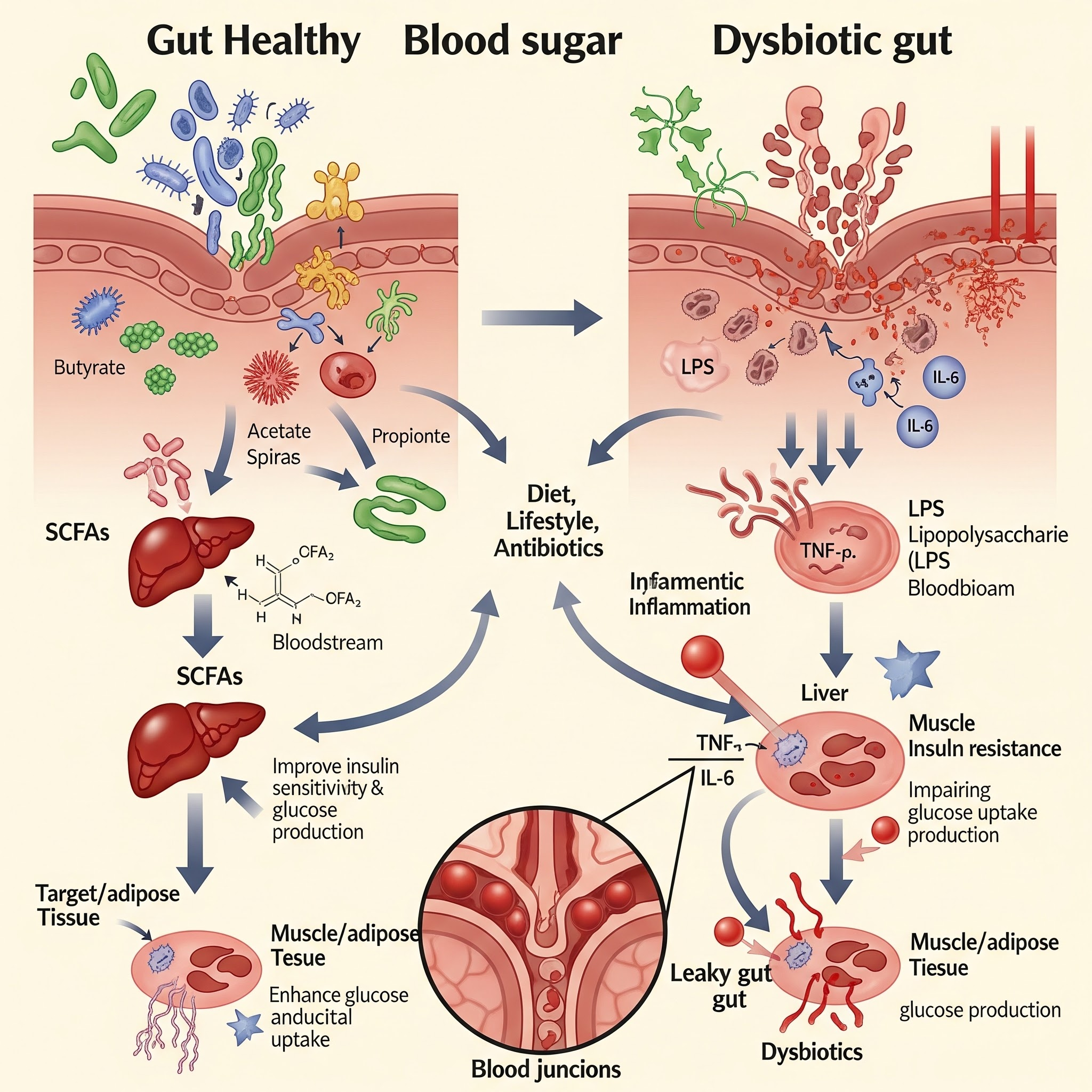
When disturbed, a condition known as dysbiosis can influence several metabolic processes, including blood sugar regulation.
How the Gut Influences Blood Sugar Regulation
The connection between gut health and diabetes is now strongly supported by emerging research.
Your gut microbiome affects:
- Insulin sensitivity
- Inflammatory responses
- Nutrient absorption
- Appetite regulation
Certain beneficial gut bacteria produce compounds called short-chain fatty acids (SCFAs). These compounds:
- Improve the body’s response to insulin
- Reduce inflammation
- Support metabolic stability
On the other hand, an imbalanced gut microbiome can:
- Increase systemic inflammation
- Disrupt insulin signaling
- Contribute to insulin resistance
This means that even before blood sugar levels become noticeably elevated, changes in gut health may already be influencing how the body processes glucose.
Why This Connection Is Especially Relevant in Indian Contexts:
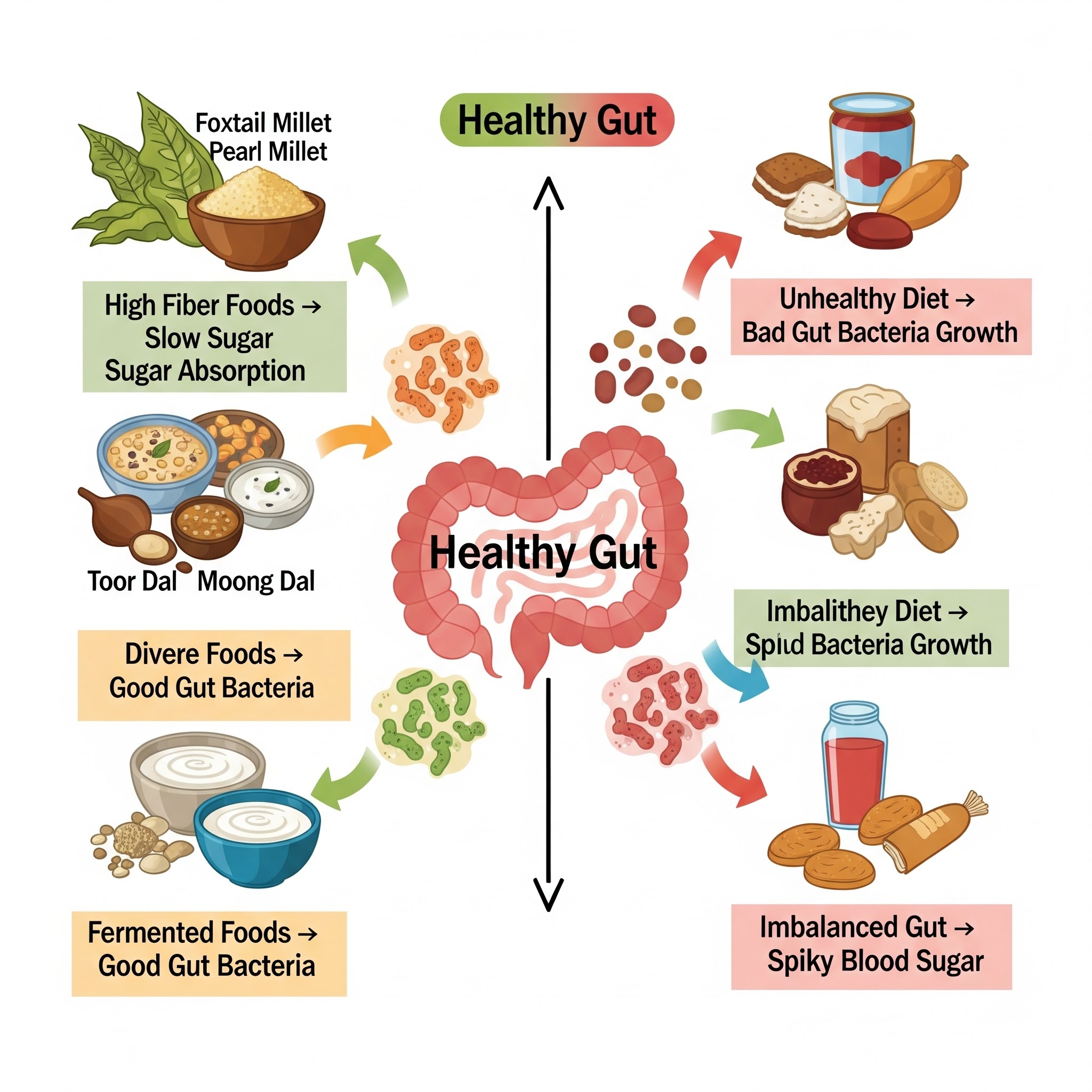
Traditional Indian diets once naturally supported gut health. Meals included a variety of fibers, fermented foods, and seasonal ingredients.
However, over time, dietary patterns have shifted:
- Increased reliance on polished grains and refined flour
- Reduced intake of fiber-rich foods
- Lower consumption of traditional fermented foods
- Greater intake of packaged and processed foods
In addition:
- Frequent antibiotic use can disrupt gut bacteria
- Chronic stress impacts gut function
- Irregular eating patterns affect digestion and microbial balance
These changes reduce the diversity of the gut microbiome, a key factor in maintaining metabolic health.
For a population already predisposed to insulin resistance, this imbalance becomes even more significant.
Recognizing Early Signals from the Gut:
The body often provides early signs when the gut is not functioning optimally.
These may include:
- Bloating or discomfort after meals
- Gas or heaviness
- Constipation or irregular bowel movements
- Increased cravings for sugar or refined foods
- Fatigue after eating
- Frequent infections or skin issues
While these symptoms may seem minor, they can reflect deeper imbalances in the gut microbiome.
Supporting the Gut to Support Metabolic Health:
The encouraging part is that the gut responds well to consistent, simple changes.
And many of these changes are rooted in traditional Indian food practices.
1. Include Fermented Foods Regularly
Fermented foods introduce beneficial bacteria into the gut:
- Curd
- Buttermilk
- Idli and dosa batter
- Traditional fermented drinks and pickles
These help restore microbial balance.
2. Increase Dietary Fiber
Fiber acts as nourishment for beneficial gut bacteria.
Include:
- Seasonal vegetables
- Whole fruits
- Dals and legumes
- Millets such as ragi, jowar, and bajra
A fiber-rich diet supports the production of SCFAs, improving insulin sensitivity.
3. Moderate Refined Carbohydrates
Rather than eliminating foods, focus on balance:
- Reduce frequent intake of refined flour products
- Combine refined grains with whole grains or pulses
- Limit packaged snacks and added sugars
4. Pay Attention to Lifestyle Factors
Gut health is influenced by more than food.
- Stress: Chronic stress alters gut bacteria and increases inflammation
- Sleep: Poor sleep affects metabolic and gut health
- Movement: Regular physical activity supports both digestion and insulin sensitivity
Even small habits like a short walk after meals or consistent sleep timing can make a difference.
A Shift in How We Look at Diabetes:
For many, diabetes is seen as something that runs in the family.
But it is more helpful to see it as a condition influenced by “multiple factors” , including diet, lifestyle, and internal systems like the gut microbiome.
This perspective does not place blame. It creates awareness and opens the door to meaningful change.
What You Can Take Forward
You do not need to make drastic changes overnight.
Start with simple, consistent steps:
- Add one fermented food daily
- Increase fiber intake gradually
- Observe how your body responds to meals
- Create small routines around movement and sleep
As your gut health improves:
- Digestion becomes more comfortable
- Energy levels stabilize
- Cravings may reduce
- Blood sugar regulation becomes more manageable
These changes take time, but they are sustainable.
Understanding diabetes goes beyond numbers on a report.
It involves looking at the body as a connected system, where the gut plays a central role.
When you begin to support your gut, you are not just improving digestion.
You are strengthening one of the key foundations of your metabolic health.
And that is where lasting change begins.
%20(1).avif)
%20(1).avif)
%20(1).avif)
Ready to Transform Your Health?
.avif)