.webp)
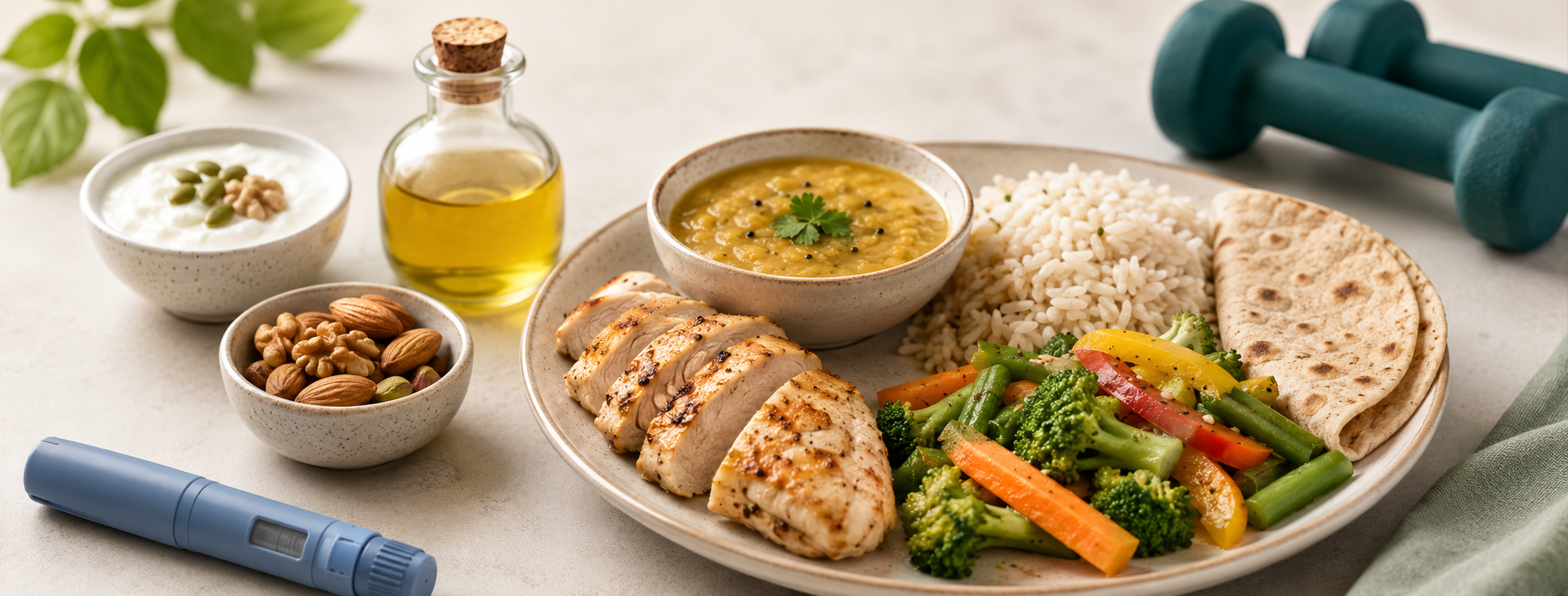
Losing Weight on GLP-1s.
But Is It the Right Kind?
The numbers on the weighing scale are moving. It feels good.
But here is something worth knowing: not all weight loss is equal, and what one eats while on a GLP-1 medication makes a huge difference to what actually comes off.
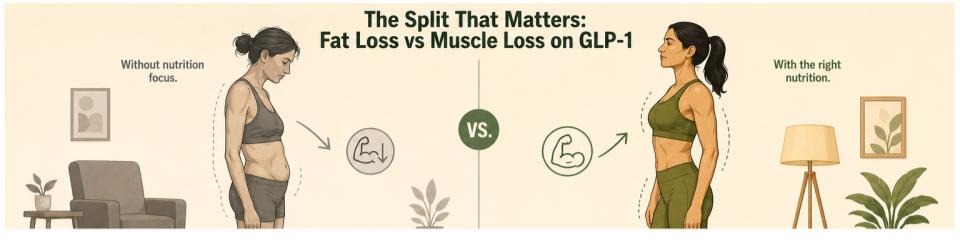
When people don't eat the right foods on GLP-1s, up to 40% of the weight lost can come from muscle, not fat. Losing muscle is a problem. Muscle keeps the metabolism running, provides energy, and keeps the body strong. If someone finishes six months of treatment feeling lighter but exhausted and weak, something went wrong.
The medication does its job. Here is what else needs to happen to get the best out of it.
Why Eating Less of Everything Backfires
GLP-1 medications reduce hunger. That's the point. But reduced hunger doesn't mean the body needs less nutrition. It means one has to be smarter about what gets eaten in a smaller amount of food.
The big one is protein. Most people in India already don't eat enough of it. When someone is on a GLP-1 medication and eating even less overall, that protein gap gets worse. And when the body doesn't get enough protein from food, it takes it from muscle instead.
That hair loss, that tiredness, that feeling of growing weaker even while getting lighter? That's not the medication's fault. That's what happens when the body doesn't get the protein it needs.
Protein: How Much, and From Where
Not all proteins work the same way inside the body. Some sources are absorbed almost completely. Others, not so much. When eating less food overall, every bite needs to count.
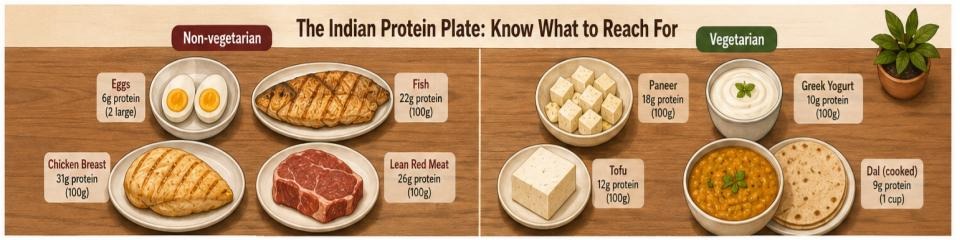
For non-vegetarians, some of the best options are already part of everyday Indian cooking:
- Eggs: 2 whole eggs provide about 12–13 grams of protein
- Chicken breast: about 31 grams per 100g serving
- Fish like rohu or surmai: 18–22 grams per 100g, plus healthy fats that help preserve muscle
- Lean red meat: 2–3 times a week supports iron and zinc levels, which often drop when eating less
For vegetarians, the key is combining foods. Rice with dal, roti with paneer, and rajma with rice. These pairings work together to give the body a more complete set of nutrients:
- Paneer: 18 grams of protein per 100g
- Greek yogurt: 8–10 grams per 100g
- Tofu: about 8 grams per 100g
One important point: a small bowl of dal on its own only gives 5–7 grams of protein. On a GLP-1, where portions are already smaller, that is not enough. Pairing dal with paneer, curd, or another protein source is not optional. It is the strategy.
Fat Is Not the Enemy
This surprises many people. Fat in food does not automatically become fat on the body.
Certain vitamins, specifically A, D, E, and K, can only be absorbed when fat is eaten alongside them. Without dietary fat, these vitamins go to waste regardless of how much one consumes. Fat also supports hormone function, keeps one feeling full for longer, and provides steady energy in a way that rice and bread simply cannot.
Good fat sources that fit naturally into Indian eating:
- Cooking with cold-pressed oils, not fat-free alternatives
- A small handful of mixed nuts as a snack
- Full-fat dairy in reasonable amounts
- Fatty fish a couple of times a week
A practical example: paneer bhurji made with a little ghee and some vegetables provides protein, fat, and key nutrients in one small serving. That is a genuinely good meal when on GLP-1 medication.
The Order One Eats Food Actually Matters
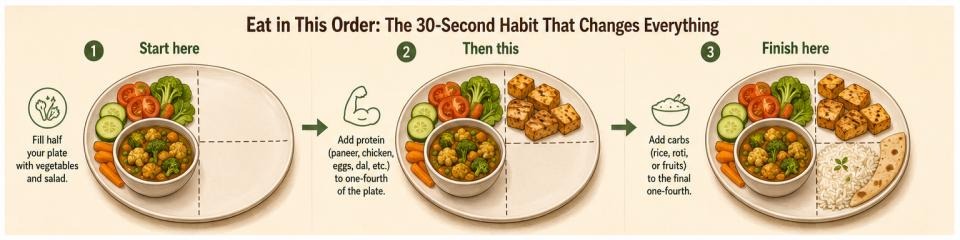
Here is a simple change most people have never tried: eating vegetables and protein before carbohydrates.
Research shows this one shift can reduce the blood sugar spike after a meal by up to 37%. That means more stable energy, fewer cravings, and better results overall.
The traditional Indian plate usually puts rice or roti at the center, with everything else around it. A small reorder, sabzi and dal first, then the rice or roti, can make a real difference without changing a single ingredient.
When appetite is already reduced by the medication, this matters even more. Protein and vegetables go on the plate first. Carbohydrates come after. The body gets what it actually needs before it runs out of room.
The Summary
Perfection is not the goal. The one thing worth understanding is this: the medication suppresses appetite, but it does not choose what the body loses. That part depends entirely on what goes on the plate.
- Eat enough protein, every meal, every day
- Combine proteins if vegetarian, dal alone is not enough
- Don't fear fat; the body needs it to absorb vitamins and stay hormonally balanced
- Eat vegetables and protein before carbs; it takes 30 seconds and genuinely helps
The drug opens a window. What one eats inside that window determines what the body holds onto and what it gives up.
%20(1).avif)
%20(1).avif)
%20(1).avif)
Ready to Transform Your Health?
.avif)