.webp)

Insulin Resistance: The Hidden Link Between Your Gut, Blood Sugar & Weight
Understanding how your body processes food and how simple, consistent changes can help restore balance.
Many individuals today are making conscious efforts toward better health, choosing home-cooked meals, trying to stay active, and building healthier routines. Yet, the results may feel slower than expected.
Weight may remain unchanged despite effort, energy levels may fluctuate throughout the day, and hunger may return sooner than anticipated. This can feel confusing, especially when you are already taking steps in the right direction.
In many such situations, one underlying factor plays an important role: insulin resistance.
Understanding insulin resistance brings clarity to how your body responds to food, how it stores energy, and how different systems within the body stay connected. When you begin to support this process, changes often feel more aligned and sustainable.
What is Insulin Resistance?
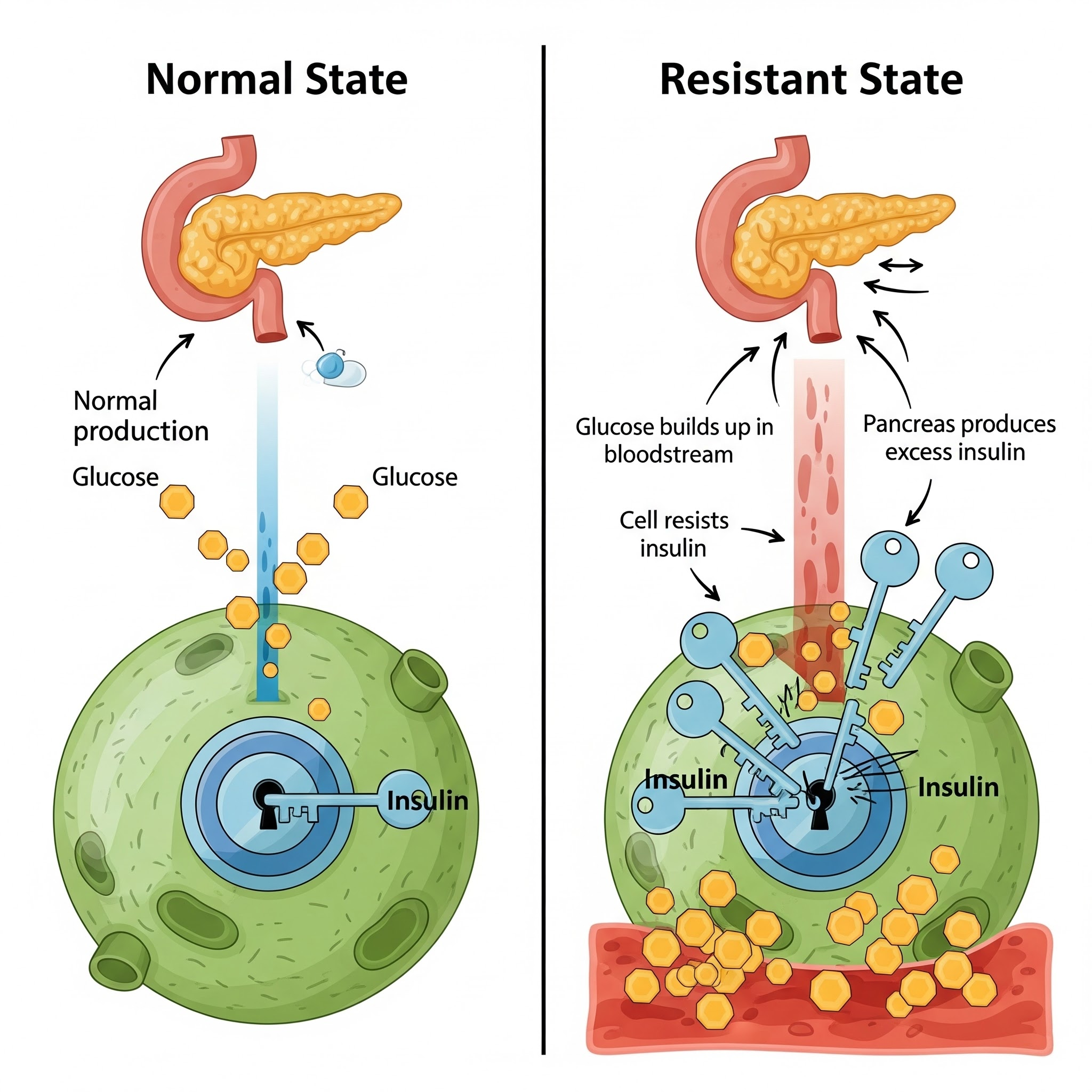
Insulin is a hormone that helps move sugar (glucose) from your bloodstream into your cells, where it is used for energy.
When the body becomes less responsive to insulin, it begins to produce more insulin to maintain the same function. This condition is known as insulin resistance.
Over time, this can influence:
- Increased fat storage, especially around the abdomen
- Frequent hunger or early return of appetite
- Fluctuating energy levels
- Changes in blood sugar regulation
It is helpful to think of insulin resistance as the body asking for better coordination between food, movement, and internal balance. The encouraging part is that this process is highly responsive to lifestyle changes.
Why does it matter early?
Insulin resistance often develops gradually and may not be immediately reflected in routine blood tests. However, the body provides early signals worth noting.
These may include:
- Feeling hungry soon after meals
- Cravings for sugary or refined foods
- Afternoon fatigue or low energy
- Difficulty managing weight despite effort
These signs are helpful. They allow you to understand what your body needs and take supportive steps early on.
Addressing insulin sensitivity at this stage often leads to better long-term outcomes, including improved energy, a more stable appetite, and better metabolic balance.
The Role of Gut Health
The gut plays a much larger role than digestion alone. It influences how the body processes nutrients, regulates energy, and responds to hormones like insulin.
A well-supported gut can:
- Improve insulin response
- Help maintain steady energy levels
- Support better satiety after meals
The gut contains a diverse community of beneficial bacteria that contribute to these functions. When this balance is supported, metabolic processes tend to function more smoothly.
Simple Ways to Support Gut Health
- Including curd or buttermilk regularly
- Eating a variety of seasonal vegetables and fruits
- Choosing whole grains instead of refined grains
- Including dals and legumes in daily meals
These are familiar, accessible foods that can be easily included in everyday routines. Consistency is more important than complexity.
Understanding GLP-1
GLP-1 (Glucagon-Like Peptide-1) is a natural hormone produced in the gut. It plays an important role in regulating appetite and blood sugar.
GLP-1 helps by:
- Supporting insulin function when needed
- Slowing down digestion so sugar enters the bloodstream gradually
- Promoting a feeling of fullness after meals
In recent times, GLP-1-based therapies have gained attention in managing diabetes and supporting weight management.
At the same time, the body naturally produces this hormone. Daily habits can support this process effectively:
- Eating balanced meals with protein and fiber
- Eating at a comfortable, mindful pace
- Avoiding long gaps followed by very large meals
When these habits are in place, the body’s natural systems work more efficiently.
Why Weight May Feel Difficult to Manage
One of the most common concerns shared is:
“I am eating carefully, yet my weight is not changing.”
This is where insulin plays an important role. When insulin levels remain elevated for longer periods:
- The body is encouraged to store energy
- Fat breakdown becomes slower
- Hunger patterns may shift
This means that focusing only on reducing food intake may not always feel effective. Supporting how the body uses and processes food becomes equally important.
When insulin sensitivity improves, the body becomes better at:
- Using glucose for energy
- Regulating appetite
- Supporting gradual and sustainable weight changes
Common Signs to Notice:
The body often communicates through subtle signs. Recognizing them can help guide timely action:
- Increased fat around the abdominal area
- Frequent hunger or snacking
- Energy dips after meals
- Cravings for sweets or refined foods
- Darkening of skin around the neck or underarms
These signs are not causes for concern, but they are useful indicators that help guide the next steps.
Why It Is Common in Indians:
In the Indian population, insulin resistance can appear even when body weight seems within a healthy range. This is influenced by both genetic and lifestyle factors.
Some common contributors include:
- Diets higher in refined carbohydrates, such as white rice and maida
- Lower intake of protein in daily meals
- Sedentary work patterns with long hours of sitting
- Irregular meal timings
- Sleep patterns influenced by stress and busy routines
At the same time, traditional Indian eating patterns offer strong potential to support metabolic health when thoughtfully structured.
Simple, home-cooked meals with balanced portions can create meaningful improvements.
Simple, Practical Steps to Improve Insulin Sensitivity
Improving insulin sensitivity does not require drastic changes. Small, consistent habits can create a lasting impact.
1. Build a Balanced Plate
At each meal, aim to include:
- A source of protein (dal, eggs, paneer, curd, legumes)
- Plenty of vegetables
- Whole grains such as roti or rice
This combination helps maintain steady energy and supports better appetite control.
2. Start Meals with Fiber
Beginning your meal with vegetables or salads helps slow down the absorption of sugar into the bloodstream, supporting a better insulin response.
3. Maintain a Regular Eating Routine
Eating at similar times each day helps the body stay in rhythm and supports hormonal balance.
4. Stay Active After Meals
A short 10 to 15 minute walk after meals can help the body use glucose more efficiently.
5. Include Strength-Based Activity
Muscle plays a key role in how the body uses glucose. Including strength-based exercises a few times a week supports insulin sensitivity.
6. Support Gut Health Daily
Regular intake of curd, buttermilk, vegetables, and home-cooked meals helps maintain a healthy gut environment.
7. Focus on Sleep and Recovery
Quality sleep and simple relaxation practices support overall metabolic function and hormonal balance.
A Sustainable Approach to Change:
Health changes feel most effective when they are realistic and consistent.
Rather than focusing on quick results, it is helpful to:
- Make small adjustments that fit into daily life
- Build routines gradually
- Observe how the body responds over time
This approach creates a strong foundation for long-term health.
Insulin resistance connects several aspects of health & nutrition, gut function, hormones, and daily lifestyle.
When you:
- Eat balanced meals
- Support your gut
- Stay physically active
- Follow a consistent routine
…the body gradually becomes more responsive.
Energy feels more stable, hunger patterns become easier to manage, and overall well-being improves.
The body is designed to function in balance.
With the right support through food, movement, and routine, it begins to respond more efficiently and comfortably.
At HabitNu, the focus is on creating practical, personalized, and sustainable health solutions because meaningful change is built through small, consistent habits that fit into everyday life.
If you are beginning your health journey, this can be a gentle starting point to understand your body, supporting it step by step, and allowing it the time to respond.
%20(1).avif)
%20(1).avif)
%20(1).avif)
Ready to Transform Your Health?
.avif)