.webp)

Feeling Stuck Despite Eating Right? Your Cortisol Levels Might Be Influencing It
How stress, inflammation, and daily habits shape your weight, energy, and metabolic health
Many people today are making conscious efforts to improve their health, choosing home-cooked meals, staying active, and following a routine.
Yet, there are times when the body feels a step behind.
Weight may feel slow to change, energy may rise and fall throughout the day, and hunger may appear sooner than expected. This can feel confusing, especially when you are already putting in effort.
In such moments, it helps to look at a deeper connection within the body, cortisol, and inflammation.
Understanding this connection can bring clarity to how your body responds to food, stress, and daily life.
What is Cortisol?
Cortisol is a natural hormone made by your body. It plays an important role in:
- Helping you wake up in the morning
- Supporting energy levels through the day
- Helping your body respond to stress
- Managing blood sugar and metabolism
You can think of cortisol as your body’s daily energy regulator.
It follows a natural rhythm:
- Higher in the morning to help you feel alert
- Lower in the evening to support rest and sleep
This rhythm helps your body stay balanced.
What is Inflammation?
Inflammation is your body’s internal support system.
For example, when you have an injury or infection, inflammation helps the body heal and recover.
At the same time, when the body experiences ongoing stress, a low-level, long-term inflammation can develop quietly.
This may influence:
- Energy levels
- Digestion
- Hormonal balance
- Weight patterns
The encouraging part is that this type of inflammation can improve with supportive daily habits.
How Cortisol and Inflammation Work Together
Cortisol and inflammation are closely connected.
In short periods, cortisol helps manage and control inflammation. It plays a protective role.
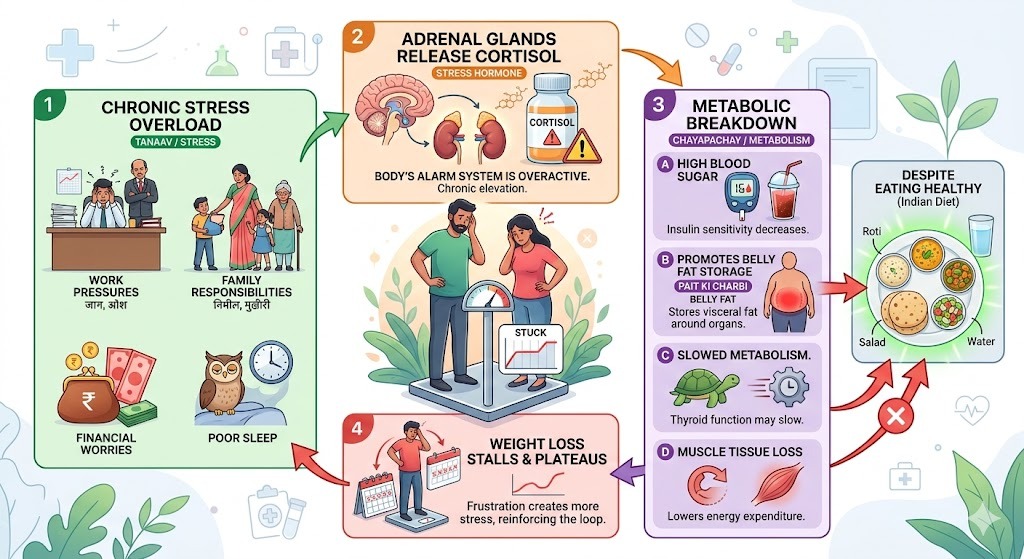
When stress continues for longer durations, the body begins to adjust:
- Cortisol levels may remain elevated
- The body may respond less effectively to cortisol
- Inflammation may stay active in the background
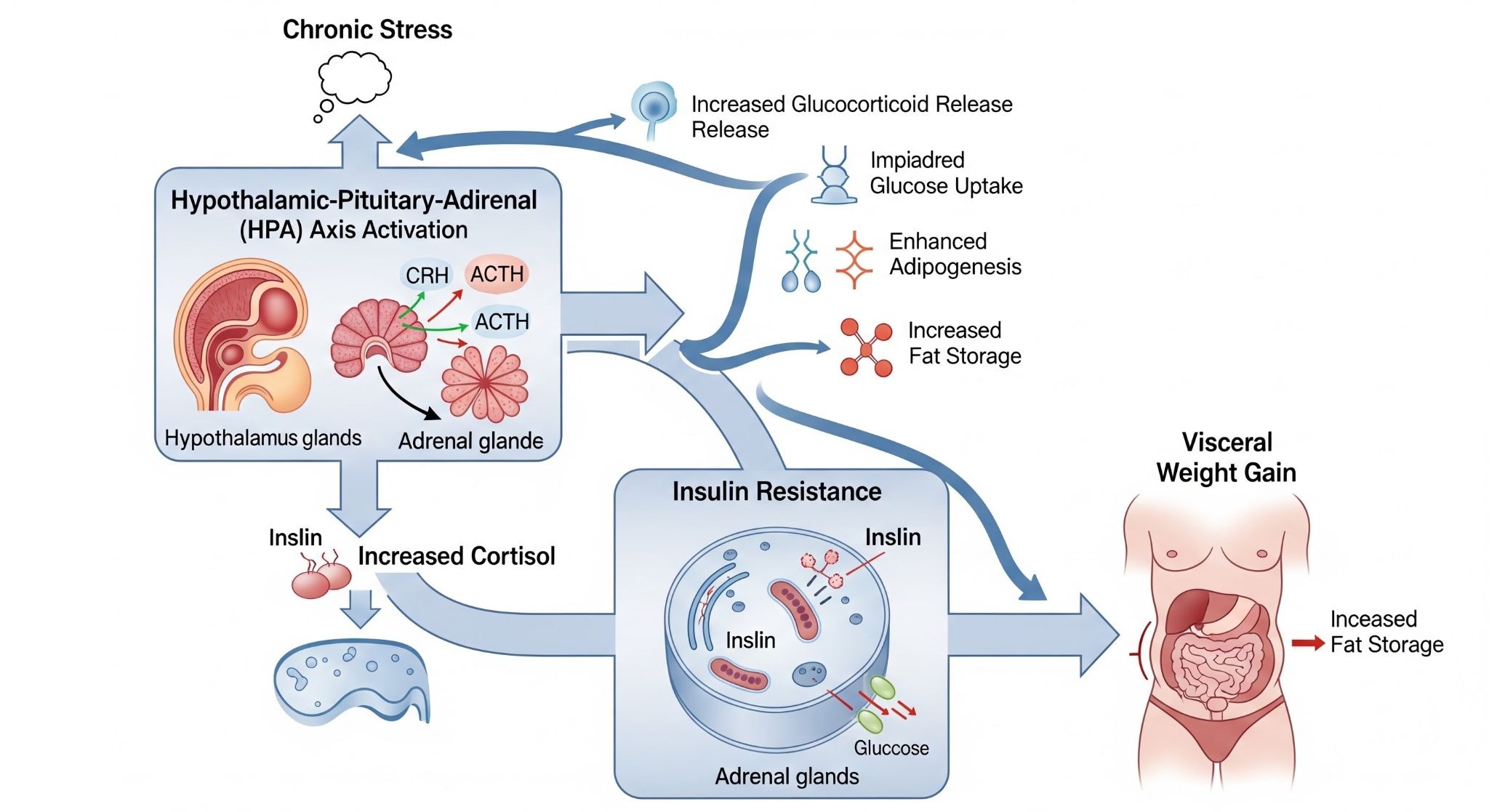
This creates a cycle in which stress and inflammation reinforce each other, influencing overall health.
Why You May Feel Stuck
When cortisol and inflammation remain higher for longer:
- The body becomes more efficient at storing energy
- Fat storage, especially around the abdomen, may increase
- Energy levels may feel inconsistent
- Hunger and cravings may feel stronger
This is often when people feel that their efforts are not fully reflected in results.
It is not about effort; it is about how the body is responding internally.
Cortisol, Blood Sugar, and Insulin Resistance
Cortisol helps increase blood sugar when your body needs quick energy.
When this happens frequently:
- Blood sugar levels may fluctuate
- The body may slowly become less responsive to insulin
- Insulin resistance may develop over time
Inflammation also plays a role in this process by affecting how efficiently the body uses glucose.
This creates a strong connection between:
- Sugar
- Blood sugar balance
- Insulin resistence
Cortisol, Inflammation, and Gut Health
The gut and brain are closely connected.
When stress and inflammation are higher:
- Digestion may feel slower
- Bloating or discomfort may be noticed
- Gut balance may shift
At the same time, a healthy gut helps reduce inflammation and supports better hormonal balance.
This makes gut health an important part of overall metabolic health.
Cortisol and Hunger Patterns
Cortisol also influences how your body experiences hunger.
You may notice:
- A stronger desire for sweets or quick snacks during busy days
- Changes in appetite timing
- Increased hunger when feeling tired
This is your body’s natural way of ensuring it has enough energy.
With balanced routines, these hunger signals become more stable.
Understanding Cortisol Through Blood Tests
Along with symptoms, certain blood tests can help give a clearer picture of what is happening inside the body.
These markers help understand cortisol balance, inflammation, and metabolic health.
1. Fasting Cortisol (8 AM)
- Reflects your morning cortisol levels
- Helps understand how your body is managing stress and energy
2. hs-CRP (High Sensitivity C-Reactive Protein)
- A key marker for low-grade inflammation
- Even mild elevation can indicate internal stress
3. Fasting Insulin
- Shows how your body is responding to insulin
- Often linked with both cortisol patterns and inflammation
4. HbA1c and Fasting Blood Sugar
- Provide insight into long-term and current blood sugar levels
- Help understand glucose balance
5. Lipid Profile
- Triglycerides and HDL levels offer clues about metabolic health
6. Ferritin (Iron Stores)
- Helps assess iron levels
- Can also reflect inflammation in certain situations
7. Vitamin D
- Supports immune and metabolic health
- Lower levels are often seen along with higher inflammation
Looking at the Complete Picture
These markers are most helpful when viewed together.
For example:
- Slightly higher hs-CRP + higher insulin + lower Vitamin D: It may suggest metabolic stress with inflammation
- Changes in cortisol, along with fatigue or sleep concerns: It may reflect a stress-related imbalance
A combined view helps create a more personalized and effective plan.
Why This is Common in Indian Lifestyles
In today’s routine, many individuals experience:
- Long working hours
- Sedentary schedules
- Irregular meal timings
- Late-night sleep patterns
- High mental load
These factors can influence both cortisol and inflammation.
At the same time, Indian lifestyles offer strong solutions:
- Home-cooked meals
- Traditional eating patterns
- Simple movement like walking
- Family-based routines
When structured well, these habits can support balance effectively.
Simple Ways to Support Cortisol and Reduce Inflammation
Improvement comes from small, consistent steps.
1. Begin Your Day with a Balanced Meal:
A combination of protein, fiber, and healthy fats helps support energy and appetite.
2. Follow Regular Meal Timings:
Eating at consistent times helps your body stay in rhythm.
3. Include Daily Movement:
Walking, especially after meals, supports better glucose use and overall balance.
4. Support Your Gut Daily:
Include:
- Curd or buttermilk
- Vegetables
- Dal and home-style meals
These help reduce inflammation and improve digestion.
5. Build a Supportive Sleep Routine:
Consistent sleep timing and a calm bedtime routine help regulate cortisol.
6. Add Small Moments of Pause:
Short breaks during the day, like deep breathing or mindful eating, help the body relax.
7. Eat Mindfully:
Eating slowly supports digestion, satiety, and hormonal balance.
Bringing It All Together
Cortisol and inflammation connect multiple aspects of health:
- Stress
- Energy
- Weight
- Hunger
- Blood sugar
- Gut health
When these areas are supported together, the body gradually becomes more balanced.
If you have been feeling stuck despite your efforts, this may simply be your body asking for a more supportive rhythm.
With small, consistent changes in:
- Food
- Routine
- Movement
- Sleep
…your body begins to respond in a more aligned and comfortable way.
Your body is always working with you. With the right support, it finds its balance.
%20(1).avif)
%20(1).avif)
%20(1).avif)
Ready to Transform Your Health?
.avif)