.webp)
Eating Well the Indian Way
Make your traditional plate work harder for your health without giving up the food you love.
Indian food is, at its core, incredibly healthy. It is built around vegetables, lentils, whole grains, and spices with proven health benefits. The challenge for most people today is not what they eat - it is how much, how it is prepared, and how it fits into a more sedentary lifestyle.
The good news? You do not have to change what you love. A few evidence-based tweaks to your everyday meals can make a meaningful difference to your weight, energy, and long-term health.
Four science-backed adjustments to your daily plate
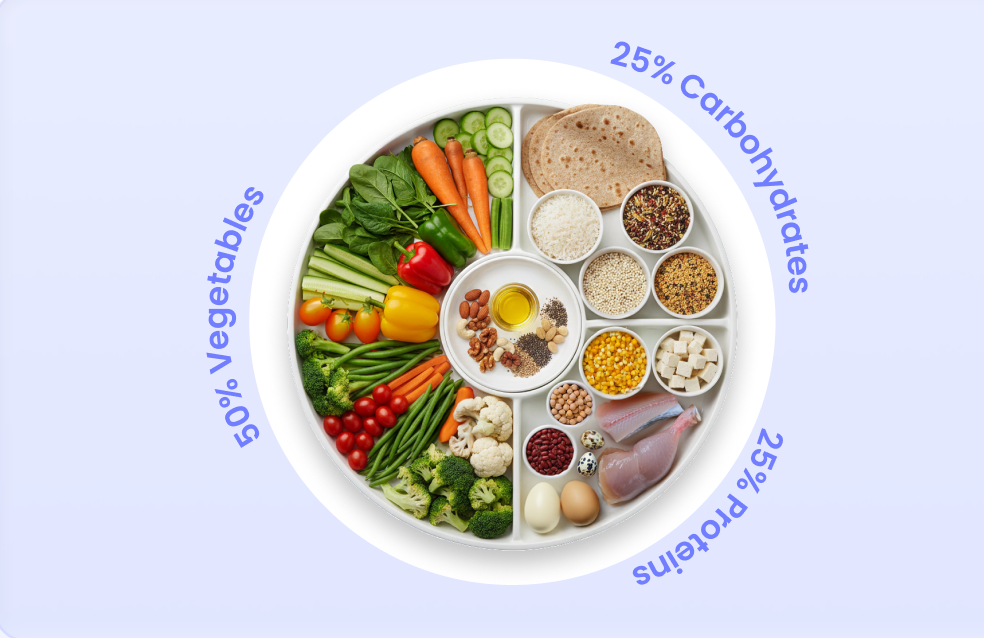
1. Choose one grain per meal — not two
Many Indian households serve both rice and roti at the same meal. Both are healthy in isolation, but together they significantly increase the meal's total carbohydrate and calorie load.
2. Pair your dal with a complete protein
Dal is an excellent source of fiber and plant protein. However, dal alone is an incomplete protein; it is low in the amino acid methionine. Pairing it with a complementary protein source improves the overall quality of your meal.
3. Measure your cooking fat
Ghee, mustard oil, and coconut oil are traditional cooking fats with real benefits, including supporting fat-soluble vitamin absorption and gut health. The problem is rarely the type of fat; it is the unmeasured amount.
4. Stop eating when you feel 80% full
Indian culture ties food to love and hospitality, and that is a beautiful thing. But it also makes it easy to eat past the point of comfortable fullness, especially in social settings or when food is prepared with care.
Why lasting change beats short-term diets
Crash diets and extreme restriction do produce short-term weight loss. But the evidence is clear: over 80% of people who lose weight through severe calorie restriction regain it within two years, often gaining more than they lost.
The adjustments above are not a diet. They are small, sustainable changes to a way of eating you already know and enjoy. That distinction matters both for long-term results and for your relationship with food.
Traditional Indian diets, when portion-aware and protein-sufficient, align closely with dietary patterns associated with reduced risk of Type 2 diabetes, heart disease, and obesity. The goal is not to reinvent your plate; it is to optimise it.
How HabitNu supports you
At HabitNu, we work with your food culture, not against it. Our approach is built on three pillars:
- Personal coaching — The one-on-one guidance from coaches who understand Indian diets and adapt recommendations to your actual meals and lifestyle.
- Micro-habit building — Making small, specific changes (like adding a salad before your main meal or switching to a smaller plate) that compound over time into lasting results.
- Clinical support when needed — For those who need additional help, medically supervised weight management options are available alongside lifestyle changes.
Your health journey does not require you to eat differently from your family or give up what you love. It requires a little more intention and the right support to make that intention stick.
%20(1).avif)
%20(1).avif)
%20(1).avif)
Ready to Transform Your Health?
.avif)